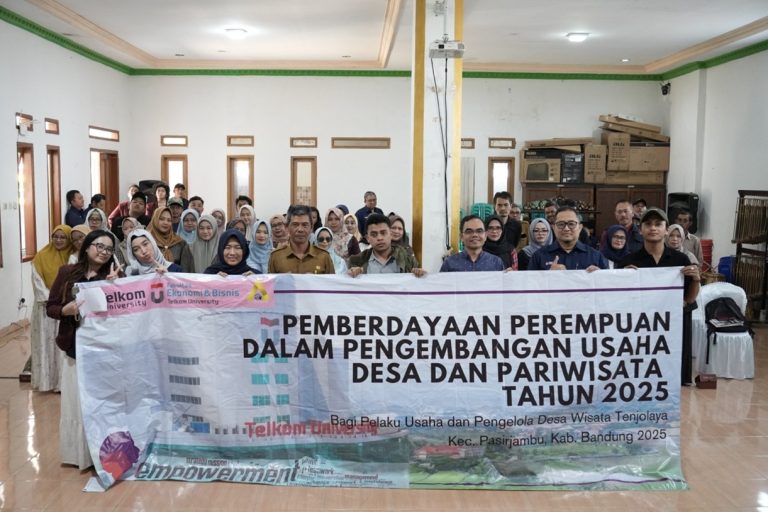


Bandung, 13 Juni 2025 – In order to strengthen economic and social independence in Islamic boarding schools, the Faculty of Economics and Business at Telkom University held a community service activity at Al-Kasyaf Islamic Boarding School, Cileunyi, Bandung Regency. This activity, which took place on Friday, June 13, 2025, aimed to assist Islamic boarding schools in designing and optimizing sustainable business processes, particularly in managing zakat and waqf-based business units.
This activity is a form of strong commitment to community service through various training programs and workshop aimed at empowering the community, particularly in the economic and business fields. Through a research- and practice-based approach, the Faculty of Economics and Business at Telkom University strives to make a positive contribution to improving the quality of life of the community.
Al-Kasyaf Islamic boarding school is known for its eco-Sufism approach, which integrates religious education with economic empowerment and environmental management. However, despite its great potential for economic empowerment, this Islamic boarding school faces challenges in managing its business units in a structured and optimal manner. This is the basis for holding a workshop themed “Business Transformation of Al-Kasyaf Islamic Boarding School: Designing and Optimizing Sustainable Business Processes.”
This event was attended by a number of lecturers from the Faculty of Economics and Business at Telkom University, including Ade Irma Susanty, Ph.D., Herdiansyah Gustira Pramudia Suryono, S.T., ME., Citra Kusuma Dewi, Ph.D., and Dr. Adrian Ariatin, M.B.A. The lecturers provided training and practical guidance to the students, who also serve as managers of the pesantren’s business units. Al-Kasyaf Pesantren itself manages several business units, such as soap processing, tempe production, and waste bank management.
Business Process Mapping and Business Efficiency Improvement
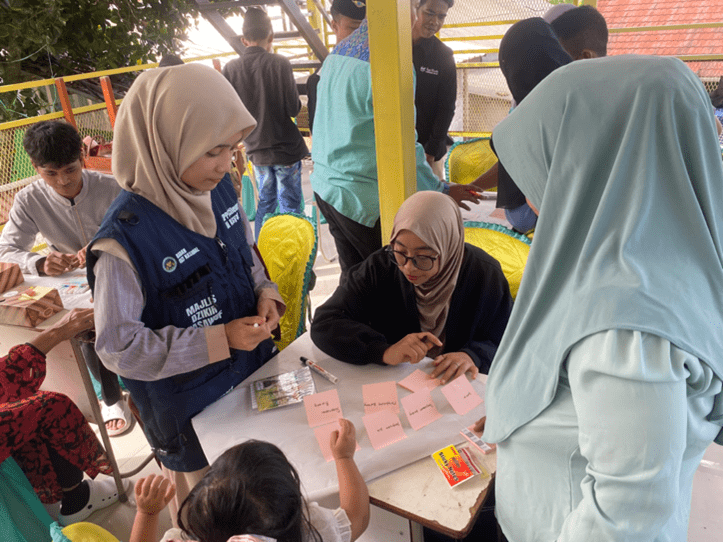

The training began with mapping the (workflow) in each business unit within the Islamic boarding school. Dr. Adrian Ariatin, M.B.A., then presented material on ways to improve and manage workflow to increase business efficiency. Pesantren, which currently has operating business units, are expected to develop Standard Operating Procedure (SOP) for each unit in order to improve the effectiveness and sustainability of their businesses.
This workshop also emphasizes the importance of a good customer service system and effective marketing strategies. With these steps, it is hoped that the appeal of pesantren products will increase, and existing business units can have a broader economic impact, both for the pesantren itself and the surrounding community.
The Role of Islamic Boarding Schools as Agents of Social and Economic Change
According to Herdiansyah Gustira Pramudia Suryono, S.T., ME., representing Telkom University in this activity, “Islamic boarding schools play a very important role in community empowerment. In addition to being a center for religious education, Islamic boarding schools can also be agents of social and economic change. With a more structured and sustainable business model, Al-Kasyaf Islamic Boarding School can serve as an example for other Islamic boarding schools in managing zakat and waqf-based business units for economic independence.”
The Al-Kasyaf Islamic boarding school itself, through its leader, Dr. Giovani, welcomed this activity. “This training has been very helpful. We hope to be able to manage our business units better and produce products that are competitive in the market, while also increasing the economic independence of the Islamic boarding school,” he said in his speech.
Increasing Positive Impact on Society
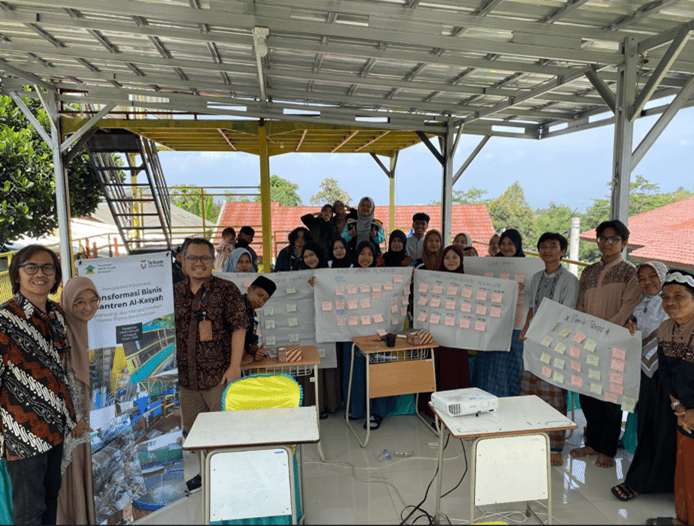

The Workshop held at Al-Kasyaf Islamic Boarding School is also expected to strengthen the position of Islamic boarding schools as community education centers that not only teach religious knowledge but also facilitate economic empowerment that has a direct impact on the surrounding community. With improved systems and business processes, the pesantren is expected to create jobs, reduce poverty, and improve the quality of life for students and local residents.
With the implementation of this activity, Telkom University hopes to continue playing an active role in supporting community economic empowerment through community service focused on developing sustainable business models in Indonesian Islamic boarding schools.